
The Earth Moved for the Sanctuary Garden
A huge polytunnel supported by Dunfermline Carnegie Trust
Connecting Food and how to grow it
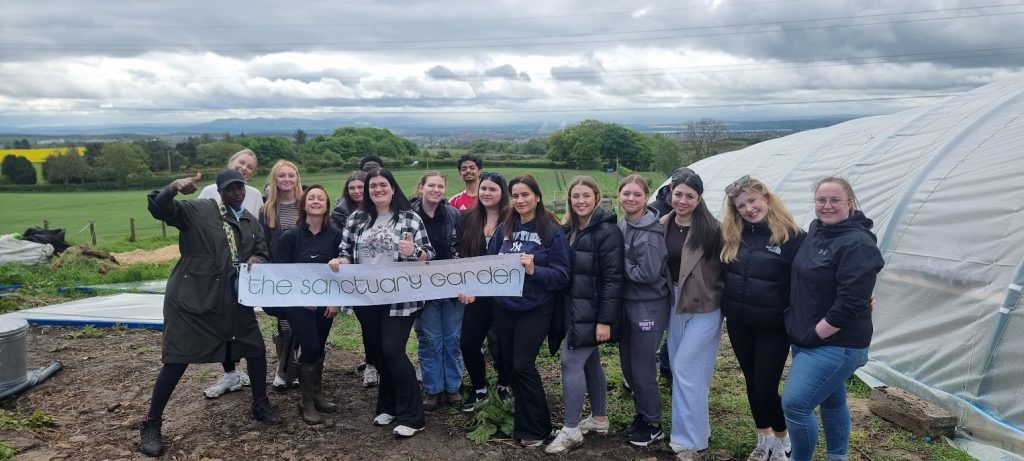
Volunteer BBQ celebration
The incredible progress at The Sanctuary Garden is a direct result of the support, time and effort put in by the volunteers. Today’s BBQ was a small way to thank everyone. The weather was glorious, the food delicious but most of all, the conversations and laughter was the highlight.
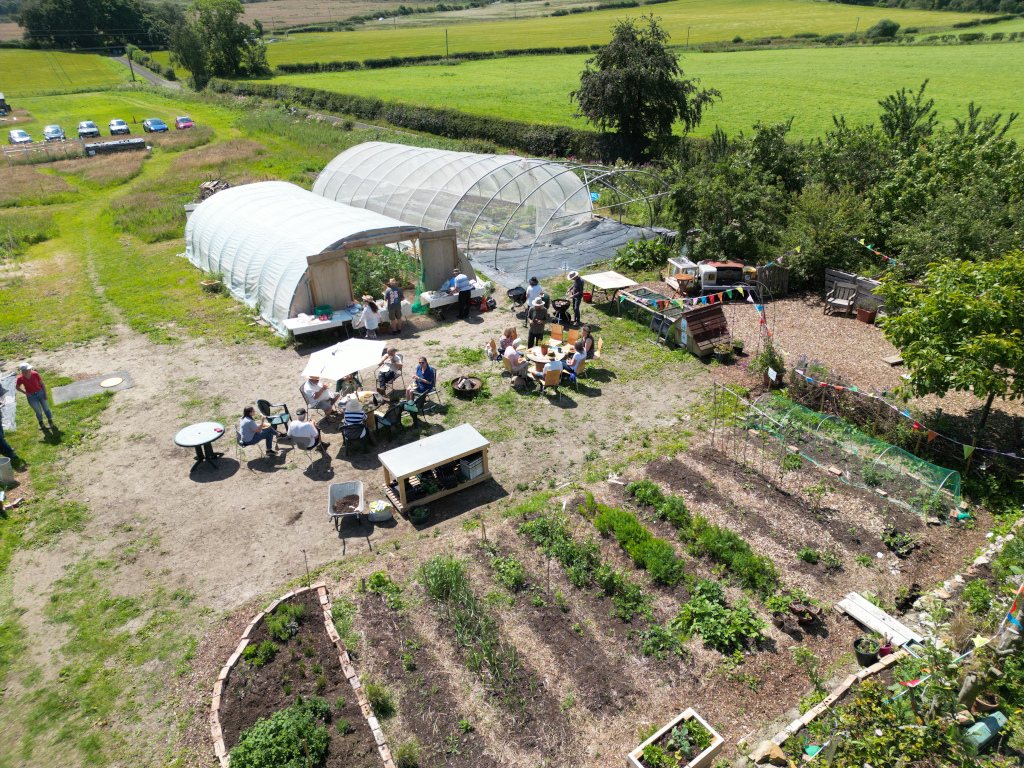
Open Day, new polytunnel and 1st donation of vegetables
The Open Day was a success, helped by the best weather of the year so far. Volunteers helped on the day and the feedback was really positive. Special thanks to Maria who helped give the garden a festival feel.
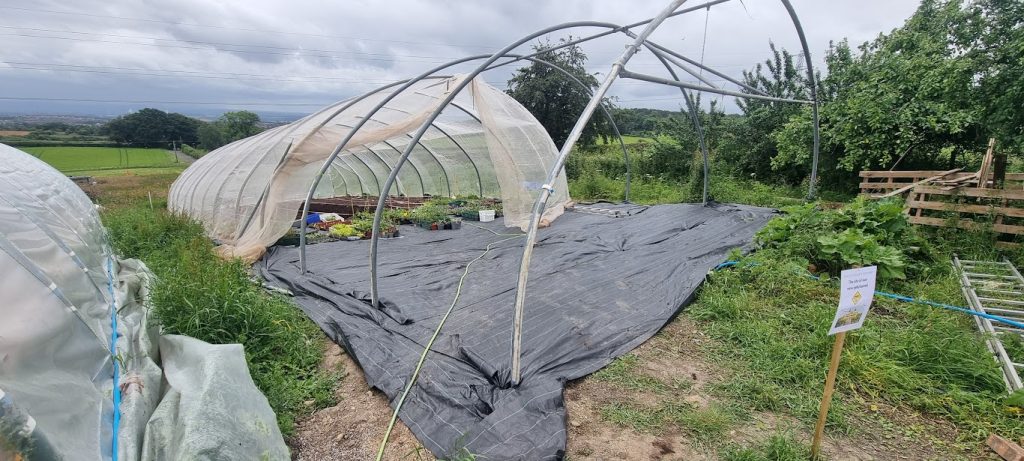
The second commercial polytunnel, donated by Fiona and Richard is now up. Rather than cover it with polythene, we used some up-cycled environmesh that keeps out the birds and cabbage white butterflies. It also slows down the wind and makes the tunnel much warmer and the plants less battered by the wind.
We are planning to cover the top half of the tunnel with plastic and make it a dry work space to plant seeds, pot on and also run workshops. Thanks to the Carnegie Dunfermline Trust for the grant to purchase the postcrete, posts, mesh and plastic.
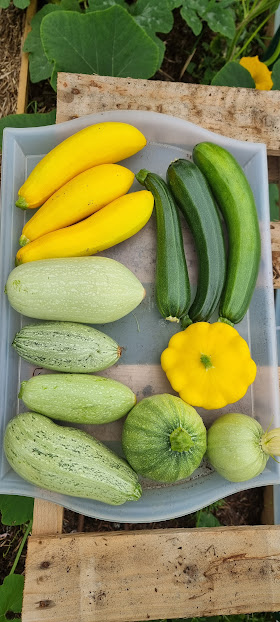
At last we have our first harvest of courgettes that was donated to the Picts in Cowdenbeath.
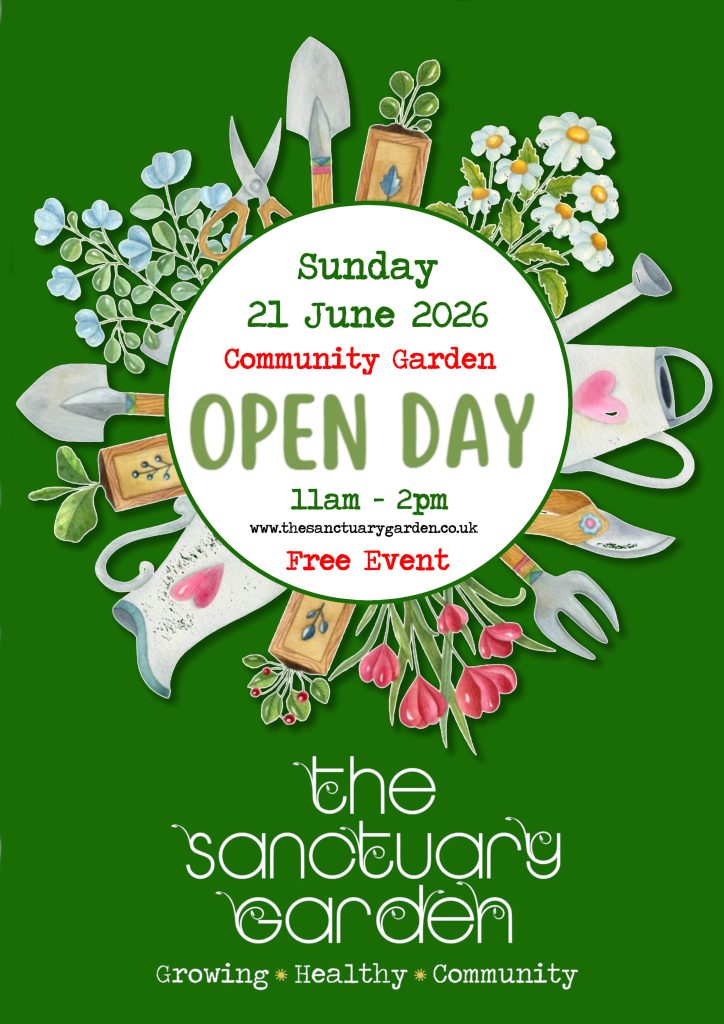
Open Day 21 June 11am – 2pm
EVENT INFORMATION
The Sanctuary Garden is a new community garden in the outskirts of Dunfermline, between Queen Margaret Hospital and Kingseat. Our mission is ‘growing healthy community’.
The community garden will be opening to the public on Sunday 21st June (11am-2pm) as part of the Fife Climate Festival. This is our first ‘Open Day’ and it’s a FREE EVENT to welcome everyone to the garden.
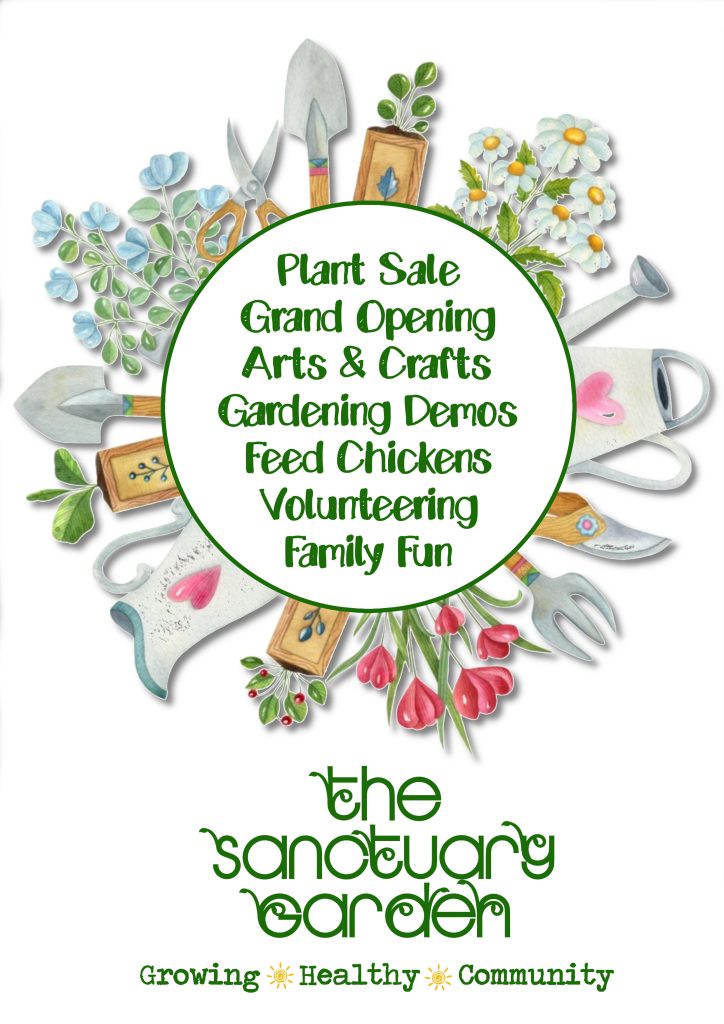
You are warmly invited to join us for our Open Day, our programme includes the grand opening, tours of the garden (vegetable beds, polytunnel, wormery, hen run and beehives), plant sale, planting and organic gardening demonstrations, family entertainment, kid’s area, art & craft workshops & refreshments.
Let’s grown our own food – together! Come and learn about organic gardening and growing our own vegetables, join in conversations about food resilience, building community and its benefits to physical and mental wellbeing in the context of the climate crisis.
Have a family fun day out, feed the chickens, enjoy being outdoors and relax in a beautiful 2-acre setting overlooking the Firth of Forth.
ADDITIONAL INFORMATION
At the Open Day you will learn about volunteer opportunities at The Sanctuary Garden.
Our volunteering sessions take place every week:
- Mondays (10am-1pm)
- Thursdays (10am-1pm)
In addition, throughout June: - Wednesday evenings (6pm-8pm)
- Saturdays (10am-1pm)
Volunteering sessions at The Sanctuary Garden are designed to allow everyone to ‘step off the hamster wheel’ and enjoy being in nature. The garden offers a natural environment, an escape from screens & technology, to enjoy a wide range of ability-matched activities.
ACCESSIBILITY
The Sanctuary Garden has a pin on Google Maps, please use the Kingseat Road (B912) entrance.
Parking is available; there is some parking at the bottom of the field and additional parking at the Dean Dog Park, past the houses at the top of the hill.
Please note: at the moment, the garden is NOT suitable for wheelchairs or those who struggle to walk. Also, the ground is uneven in parts and can be muddy / slippery – wear appropriate footwear.
Children and dogs are very welcome but please be aware that you are completely responsible for their behaviour – no excuses. Make sure everyone is well behaved during the visit.
There are beehives in the garden – please keep your distance.
Toilet facilities: the garden features a composting toilet for you to experience.
Polytunnel in action!
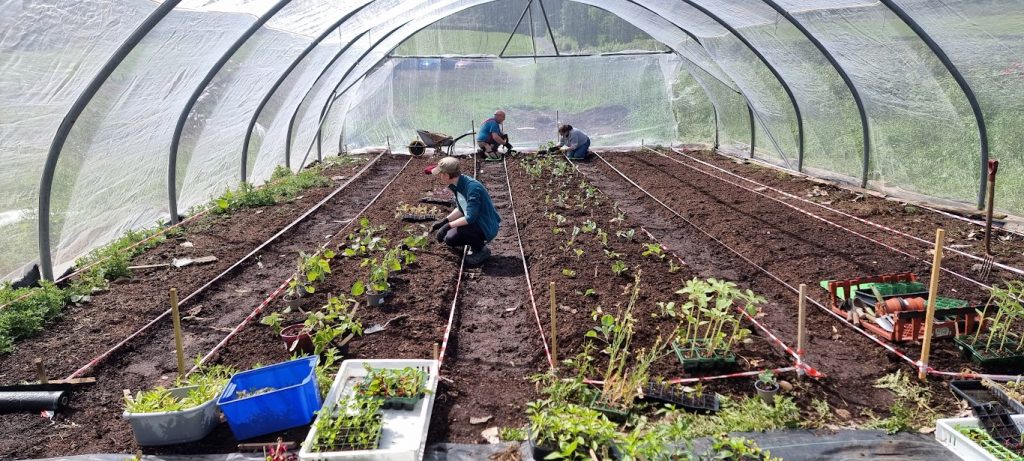
The polytunnel has had more compost added, pressure compensating drip line added, and most importantly plants in the ground. There is still some work to be done to completely finish off the tunnel but it’s 99% of the way there.
The dripline allows 2.3 litres/hour from each hole and will be connected to an automatic water timer so we don’t need to manually walk around and water. This helps especially over the weekend and non-volunteering days.
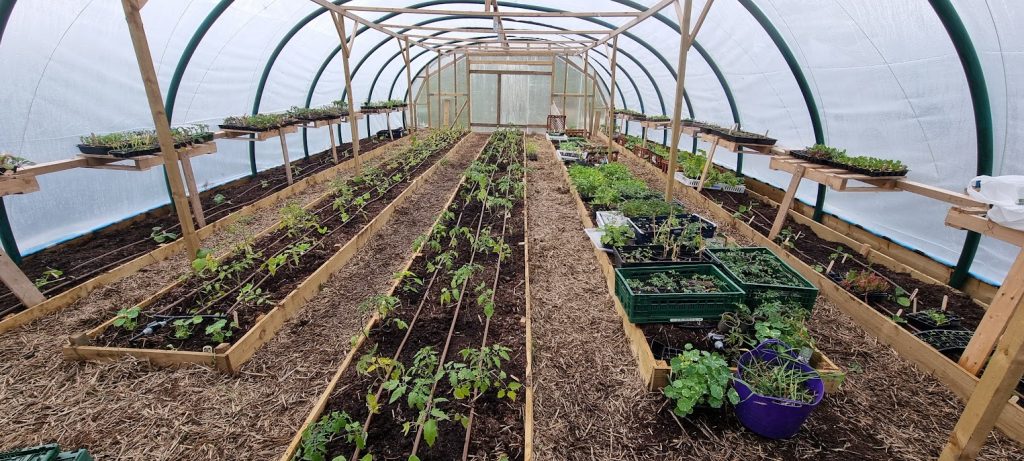
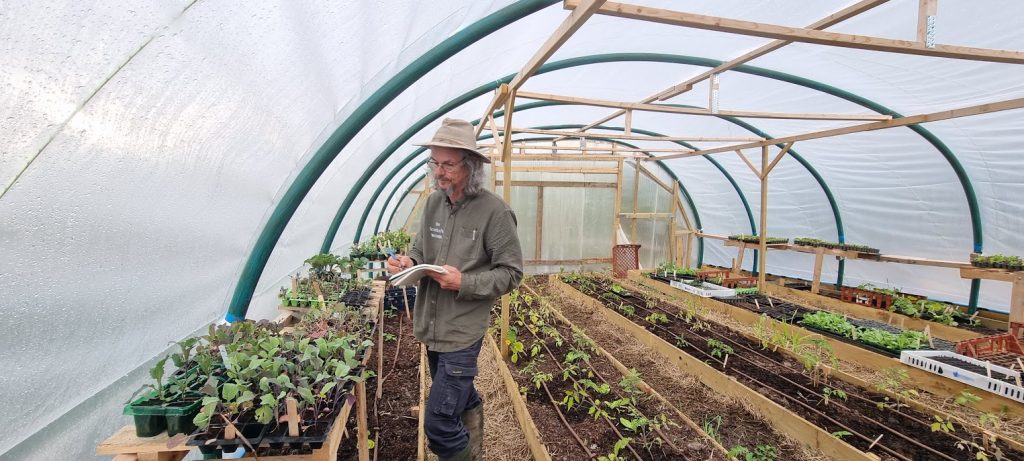
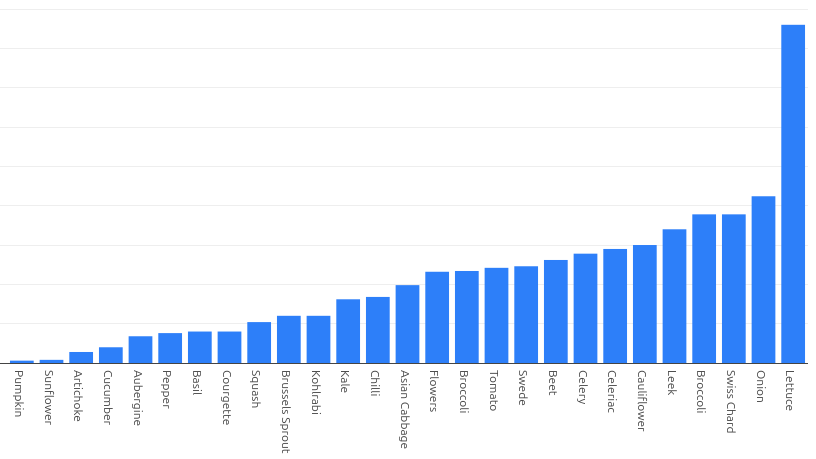
Our current total of seedlings we have either grown from seed or have had donated is 2861! We are looking forward to the Bruce Festival on the 20/31 May where with Fife Council will be able to distribute vegetables seedlings to the people of Dunfermline
Help from FMC and Fife College
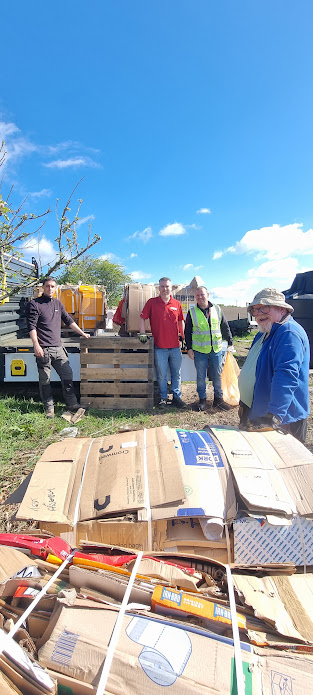
FMC have to deal with waste cardboard from their factory, typically it is baled and recycled. After a visit by their iVolunteers, they suggested we could use it. Within a week it was 4 bales of waste carboard was delivered by FMC to the garden to be used as a weed barrier.
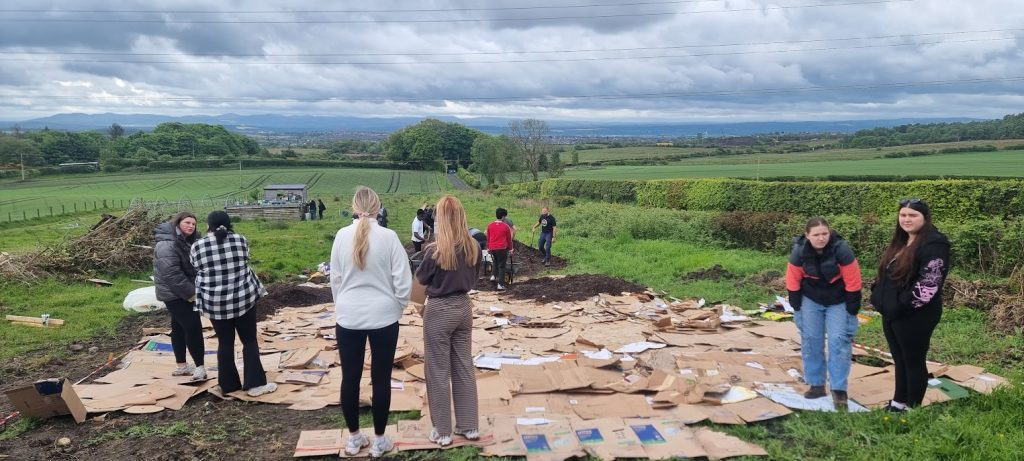
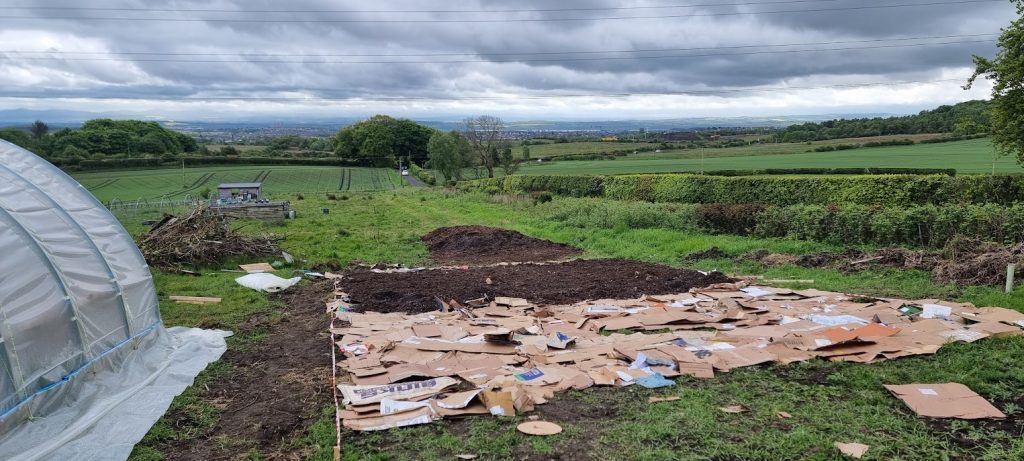
This week, 25 Fife College students came to the garden, laid cardboard and covered it with compost. This area will be inside the next polytunnel we’re building next!
Thanks to both organisations: we are grateful for your time, effort and kindness.
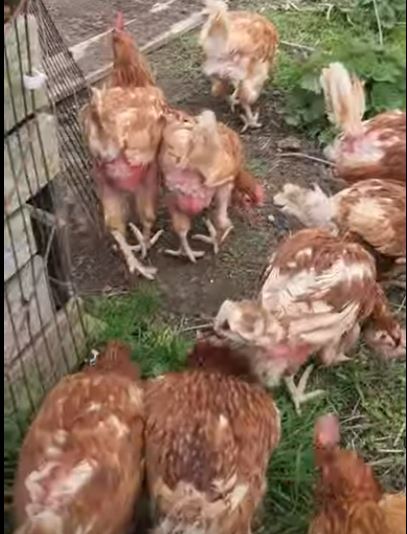
Hens adopted by The Sanctuary Garden
13 new rescue hens from the British Hen Welfare Trust join our existing pair. They are settling in and it will take a while before they get used to freedom and the outside world. They should also be back to laying eggs soon as the move is rather stressful.
We’re feeding them organic henfood, it’s good for them and makes the eggs taste great. It does cost £27 a bag compared to the standard feed which is less than £15.
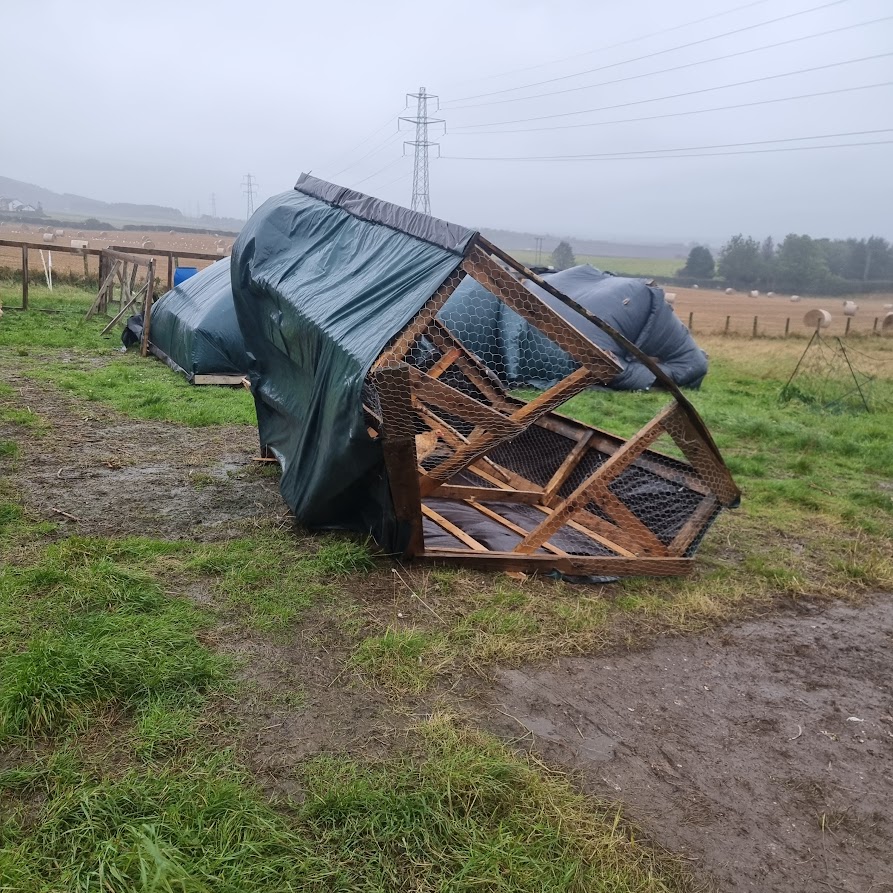
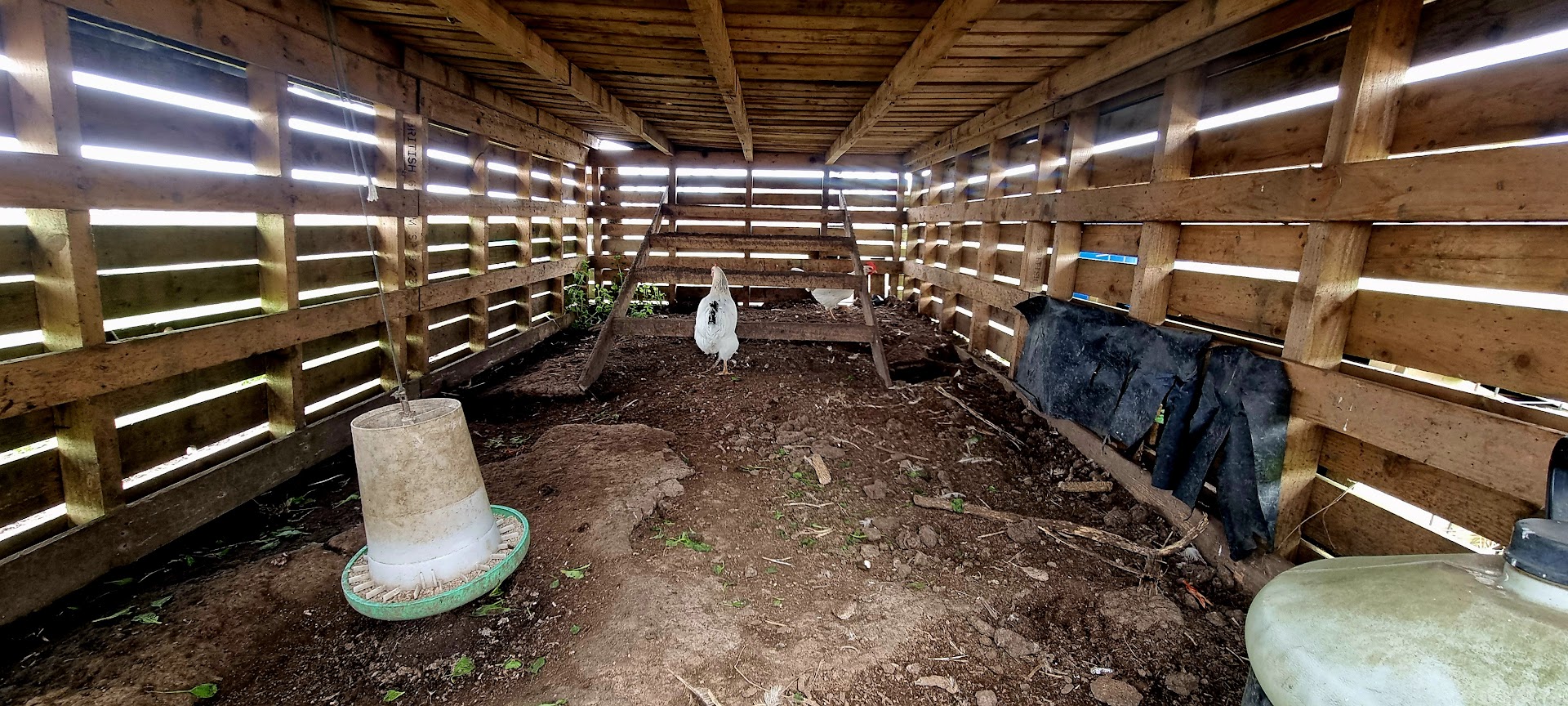
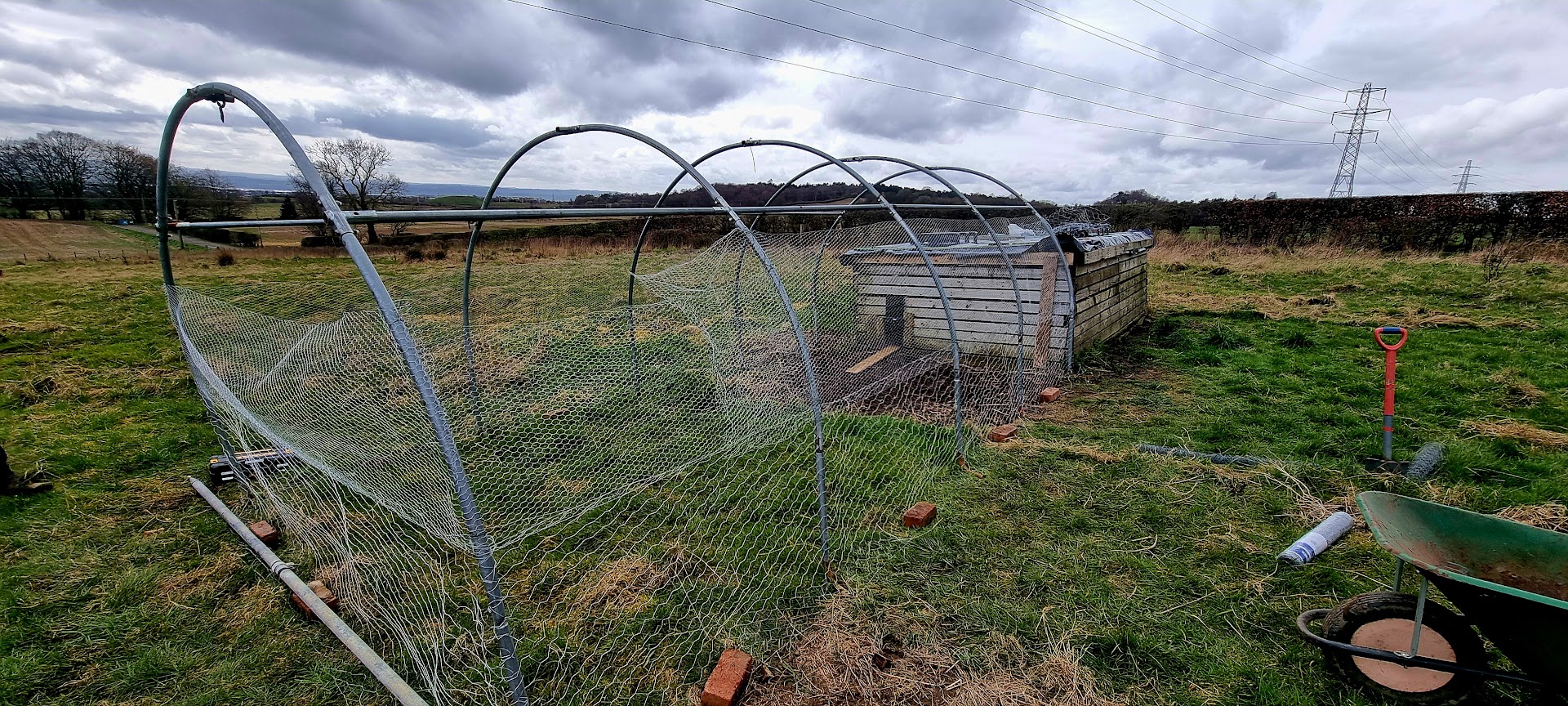
Their henrun is great for chickens but no so good for people, to get in and out. We’re looking for funding to get a new hen house. These houses have roll-away nesting boxes so the hens have difficulty eating their own eggs. It’s a real problem, at one point I had about 40 hens and was collecting about 5 eggs a day instead of 35… These henhouses are also much easier to clean and maintain, stand up in and just generally better designed. The current hen house was built in a rush because a storm trashed the previous houses, no hens were hurt, just a little bit wet and unhappy.
Community garden communal tattie bed
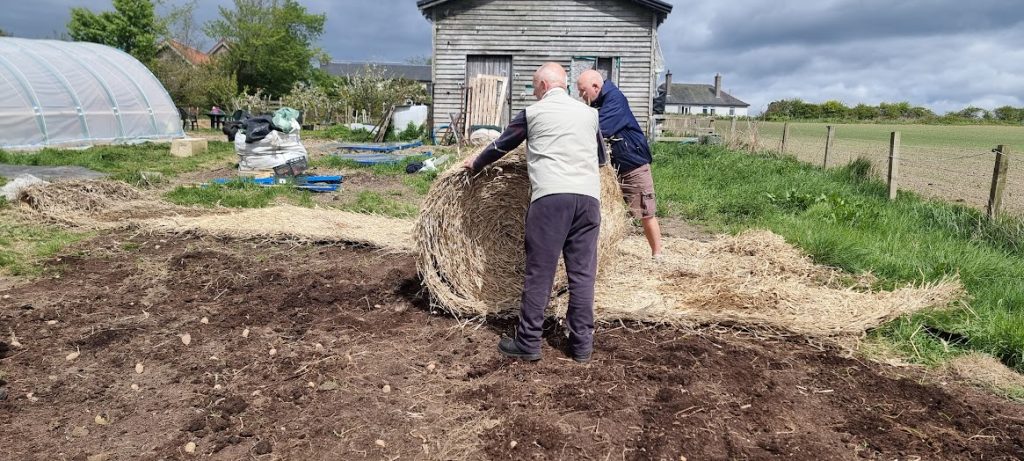
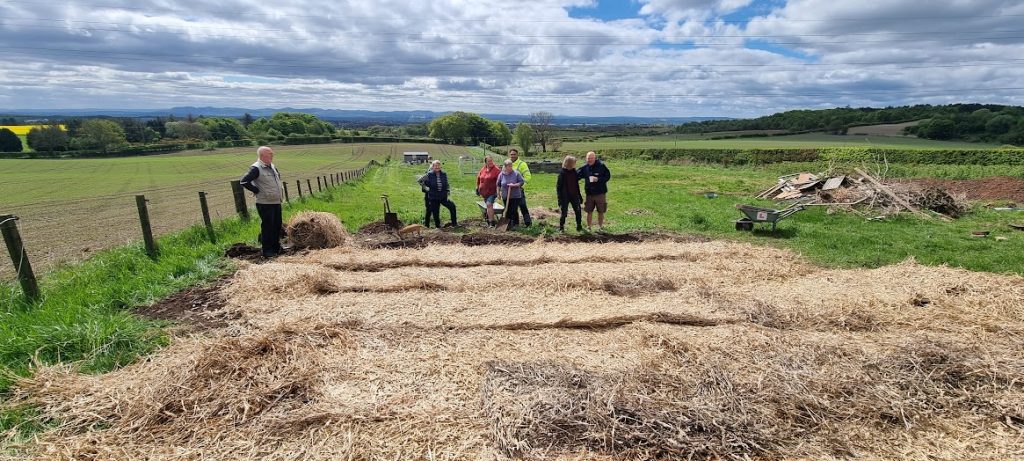
The community garden tattie planting event had three community gardens, Touch, Baldridgeburn and Crossford Allotments. We all planted in the 7m x7m bed with the seed potatoes pushed into the earth enriched with compost and finally covered with straw. The straw will keep out the light, keep down weeds and provide some nutrients allowing a no-dig harvest in the autumn. The harvest will be shared with all those involved taking home a share and the excess clamped ready for use through out the winter.
As a staple, potatoes are very popular but take up lots of space. The idea was to utilise space we have at The Sanctuary Garden and allow the smaller community gardens to grow other ‘higher maintenance vegetables while we waited for the autumn harvest.
Welcome to the social experiment