Seeds, a DIY germination chamber, heat and light!

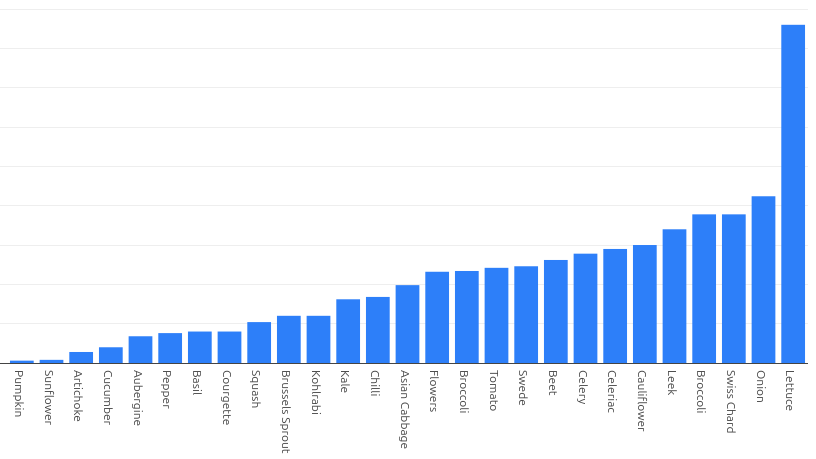
Using Airtable, we are able to check how many seeds were planted last year compared to this year. It is remarkable that we have planted 3000 seeds in 2026 so far, and 3100 during the same time in 2025. I just imagined that we were behind the curve.

The DIY germination chamber (GC) is a game changer and there are various options used by market gardeners; both Pillars of Hercules and East Neuk Market Garden use a tall fridge with a slow cooker in the bottom shelf, controlled by a reptile thermostat that keeps the inside of the fridge at a constant temperature. Fridges and freezers are a well insulated cupboards, and we’re using them to keep the heat in.

The Sanctuary Garden version is an undercounter fridge with an ST1000 controller and a 60w heating element  and it’s been set to 22.5oC. Obviously there is no light inside the fridge so it’s really important to put the seedlings under light as soon as most of them have emerged or you end up with very, very leggy seedlings. We’ve had a few failures with overly long stemmed seedlings.

The germination rate using this germination chamber (GC) is remarkable. Using heating cables beneath sand, I remember being disappointed by how few chilli and aubergines germinated last year. In the GC, the germination rate is about 75% which is great for any seed in ideal conditions. This is particularly important when you buy seed packets with a stingy 5 or 6 seeds enclosed. I’ve noticed seeds from Europe are very generous compared to seeds from the UK, especially from the big names.

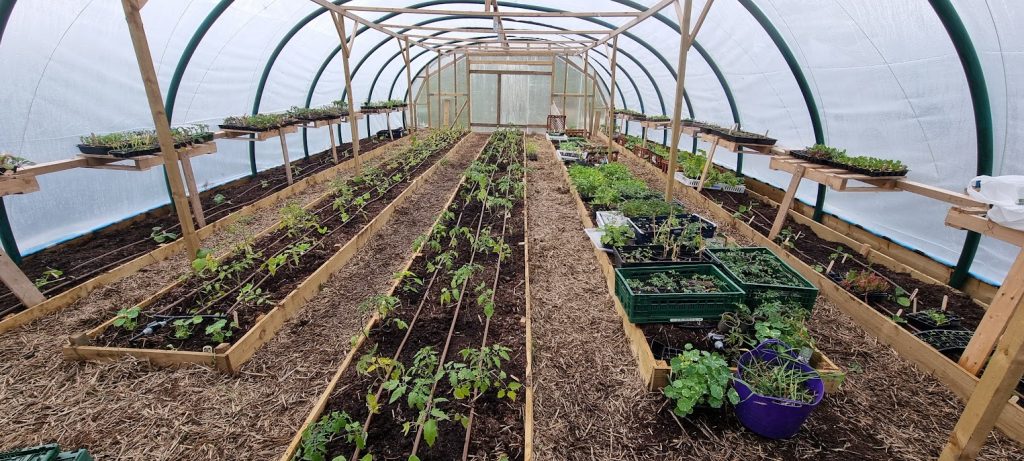
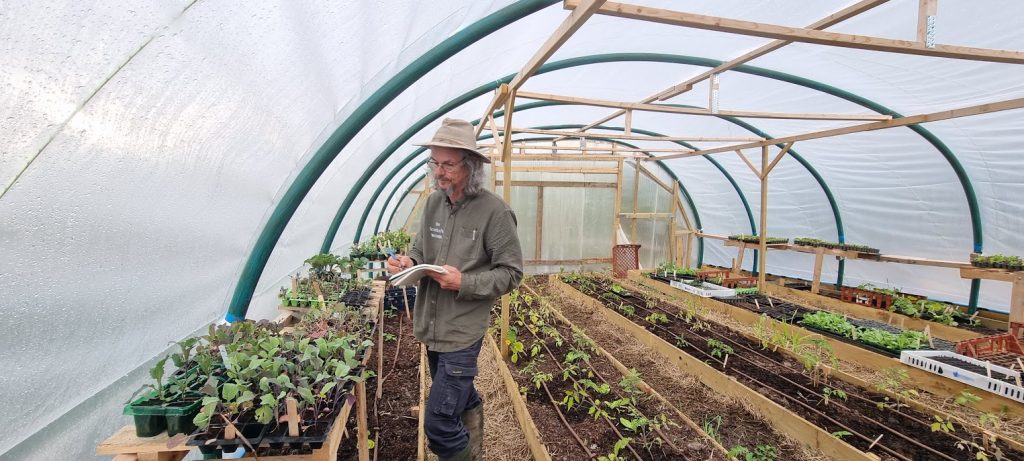
This year, we have the significant advantage of a grow-tent, grow-lights and heat. helping our seedlings. The tomatoes now have their first real leaves and have been pricked out into bigger pots.

We’re lead to believe that lighting is ‘complicated’ or at least the marketing and internet forums make it look complicated quoting UV, infrared, red, blue and daylight with conflicting views. At the cheap end, LED growlights are completely useless unless you are growing one seedling.

These are my empirical findings: use a warm white LED bulb, 150w in old money, and have it on a timer so it’s on for 18 hours and off for 6. ‘Daylight’ LED bulbs are great for established plants and ‘blue’ light will make seedlings leggy. In a local general store 4x 150w warm white bulbs and 4 pendants cost £30 and 2 bulbs are hung per shelf 89cmx 50cm (IVAR from IKEA) filled with seedling trays. We could probably use just one blub. By the equinox where the days and nights are equal – not the meteorological spring (seriously who made that up) you can put the seedlings outside as there is enough light for them to not become leggy. (with heat and frost protection.)

Keeping seeds in a dry, cool and dark place is critical to their viability. A photo organiser (6″x4″) is a perfect option.

Spring is launching us into action in our Community Garden!

Our wormeries have tiger worms and manure, the composting toilet has yet to be delivered. They are all funded by Fife Climate Hub.
We have been donated woodchip from Crawford Tree Surgery that will be share with community gardens and used in our garden for pathways.
As part of the Mental Health and Wellbeing fund from FVA, lots of the 2700 seeds planted are starting to germinate. Our target is to donate 10,000 to the local community!

Three raised beds have been installed at Dunmore Nursery in Ballingry by volunteers at The Sanctuary Garden. These beds will be filled with compost and a regular supply of seedlings will be provided for the children to plant in the next month or so.

Following a visit to “Keeping the plot” flower garden in East Neuk, a dead hedge has been installed by volunteers to act as an eco windbreak, slowing down the wind and promoting growth while providing a home for insects, birds and bees.

We’re getting ready for Spring

20 Cubes of Mushroom compost has been delivered. We’re planting seeds in snail rolls that take up significantly less space than trays.

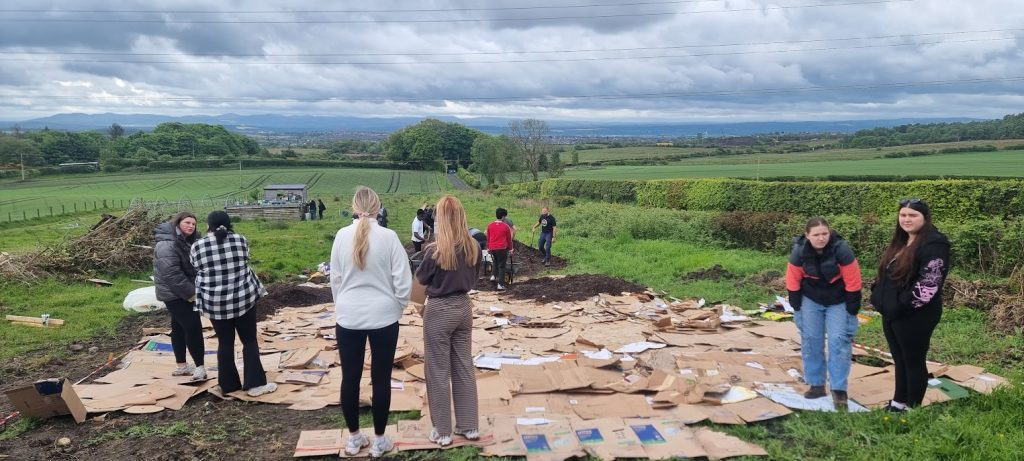
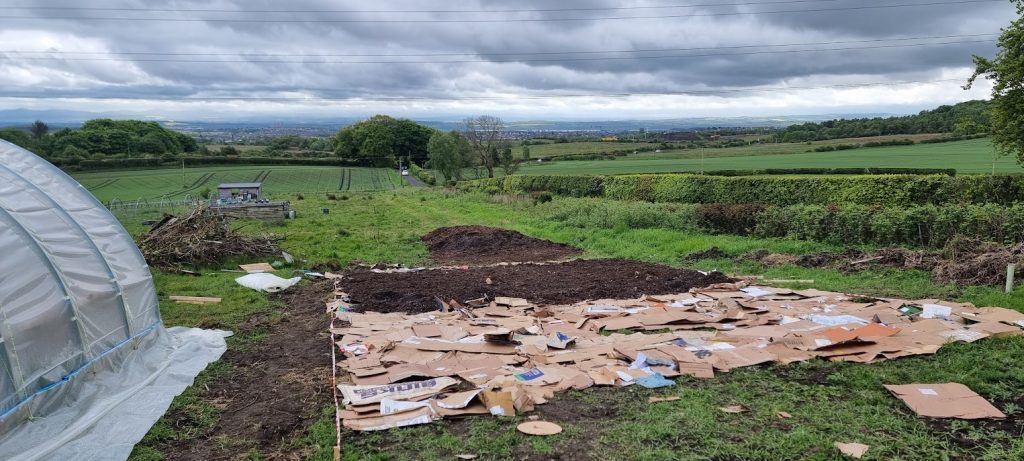
We have beds and it feels like a garden again.

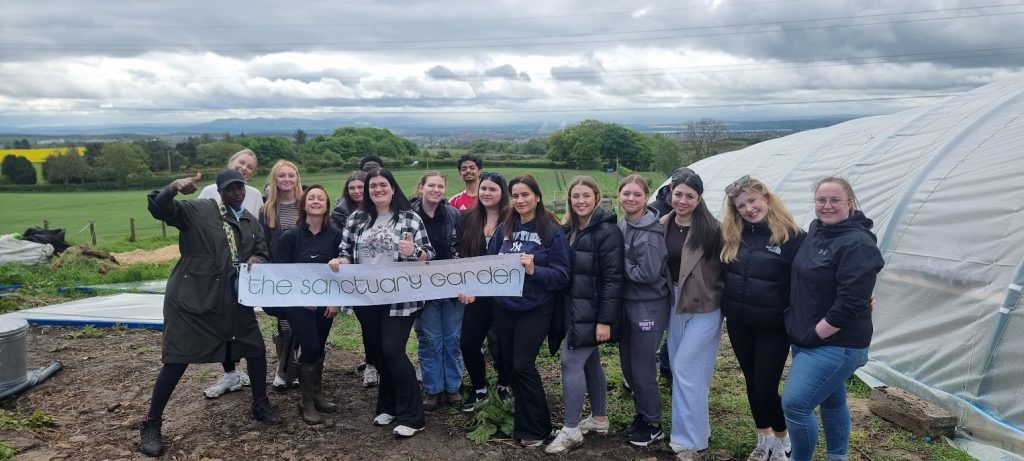
Thank you to our volunteers who are making The Sanctuary Garden come alive.

Fife Climate Hub Award Funding for a Composting Toilet, Wormery and Pathogen Testing

Fife Climate Hub has awarded £70,000 to 35 local community groups, supporting grassroots projects that tackle the climate emergency while strengthening communities across Fife, including The Sanctuary Garden.

The Sanctuary Garden has been awarded funding to purchase a composting toilet, not particularly glamorous, but a fundamental facility for a community garden. Eats Rosyth have two composting toilets that they have been in use for 7 years and based on their experience, the same model will be ordered for our garden in January 2026.

The fund also allows a wormery to setup that allows the ‘solid’ from the composting toilet to be added to the top of the wormery and the resulting vericompost will be tested for pathogens.

“Achieving Pathogen Stabilization Using Vermicomposting” by Bruce R. Eastman, published in BioCycle (Journal of Composting and Recycling), November 1999, pages 62-64. The paper details a two-year testing project in Florida where vermicomposting reduced levels of key pathogens—including fecal coliform, Salmonella, enteric viruses, and helminth ova—by three to four times within 72 to 144 hours. This is below the thresholds required for EPA Class A biosolids classification, making the material suitable for unrestricted land application.

In December 2025, Fife Climate Hub awarded £70,000 in Seed and Development funding to 35 community organisations. This major investment will help groups across Fife deliver practical action for climate and nature, while also supporting community wellbeing and resilience.

Now in its third year, the funding forms part of the Community Climate Grants scheme, a joint initiative between Fife Climate Hub and Climate Action Fife. In 2025, the Seed and Development Fund was significantly boosted by £50,000 from the UK Government’s Shared Prosperity Fund, in addition to the usual £20,000 provided by the Scottish Government.

Alice Henderson, Fife Climate Hub Manager, said:

“It is a real privilege to be part of a Fife-wide community that values climate action so highly. We received a record number of applications from groups taking action on climate, and additional support from Fife Council increased the funding pot by 250%. The quality of applications was exceptionally high, making the panel’s decisions very difficult. Alongside grants, we also offer a funded peer-to-peer learning programme that helps build capacity in community groups, independent of them receiving a grant.”

Full list of organisations which received funding:

  • Saline and Steelend Fabulous Food Pantry
  • Lucky Ewe
  • Aberdour Climate Action Network
  • Greener Kirkcaldy
  • Kinghorn Community Land Association (KCLA)
  • East Wemyss C.A.F.E. (Community Access For Everyone)
  • The Ecology Centre
  • Blue Sky Community Aid
  • North Queensferry Climate Action Network
  • The Sanctuary Garden
  • Inverkeithing Community Garden
  • Vegan Fife
  • CLEAR Buckhaven and Methil
  • CLP Nature Action
  • Touch Community Garden Ltd
  • Transition University of St Andrews
  • St Andrews Environmental Network
  • Footprint East Neuk
  • Seafield Environmental Group
  • FEAT Trading Community Interest Company
  • Big Green Market
  • Methilhill Childrens Community Initiative
  • The Hive Kirkcaldy
  • Burnturk and Kettlehill Community Trust
  • Kirkcaldy Islamic Centre
  • Dunnikier Country Park Development Group
  • Plant Based Fife
  • Over Rankeilour Walled Garden
  • Forgan Arts Centre
  • EATS Rosyth
  • Fife Seed Library
  • Floral Action Burntisland
  • Fairway Fife
  • Nourish Support Centre
  • Levenmouth Foodbank Community Support Project

The Kindness and Generosity of Strangers

A friend asked for help to move a polytunnel to his home. I was genuinely expecting a wee home sized frame, despite him having an enchanted field and woodland behind his house. On my arrival I saw loads of commercial sized polytunnels and thought “I must be in the wrong place.”

In the past, these polytunnels were used to grow mint for supermarkets. Under the guidance of Richard the polytunnel was dismantled and loaded on the trailer in about an hour and a half. I thought it would take all day. Fiona and Richard were really interested in what we were doing at the Sanctuary Garden. “Would you like one?” pointing at another monstrous polytunnel, my heart leapt. WOW what a gift!

We are planning to pickup the polytunnel in January, weather permitting. I’m still pinching myself and am very grateful for this gift that will continue to to keep giving! My expectation is that it will allow us to produce around 1000kg of organic vegetables every year! The CAD drawing below, shows the ‘big’ polypipe tunnel we’ve been designing, next to this commercial 8m x 22m polytunnel that is double the size!

Plant Dyeing Winter Workshop at the Edinburgh Botanics


Thanks to Mimi at Eats Rosyth for inviting us to a held a fabulous Plant Dyeing Winter Workshop held by Katrina Wilde at the Rosy Botanical Gardens of Edinburgh and enjoyed by 15 volunteers and staff from both gardens; it was interesting, hands on and the results were remarkable.

We were also shown the experimental and kitchen gardens and encouraged us to visit in the spring. They have several badger sets so can’t grow root vegetables!

If you’re interested, there are volunteering opportunities at the Botanics on a Wednesday

When community gardens work together, the impact is significant, we reach more people and that is our shared aim. Our organisations also benefit from the by sharing knowledge and know-how and our social network increases exponentially. Many of us waste time, resource and money by re-inventing the wheel in a dark room. My limited experience has found the staff and volunteers are keen to work with other community gardens but some of the Trustees are less enthusiastic. My guess is that many are from the commercial world, where businesses with similar aims are seen as “the competition” and are to be treated as such and avoided at all costs. By charities working together their strength and impact dramatically increases.

Storm Bram and the prototype

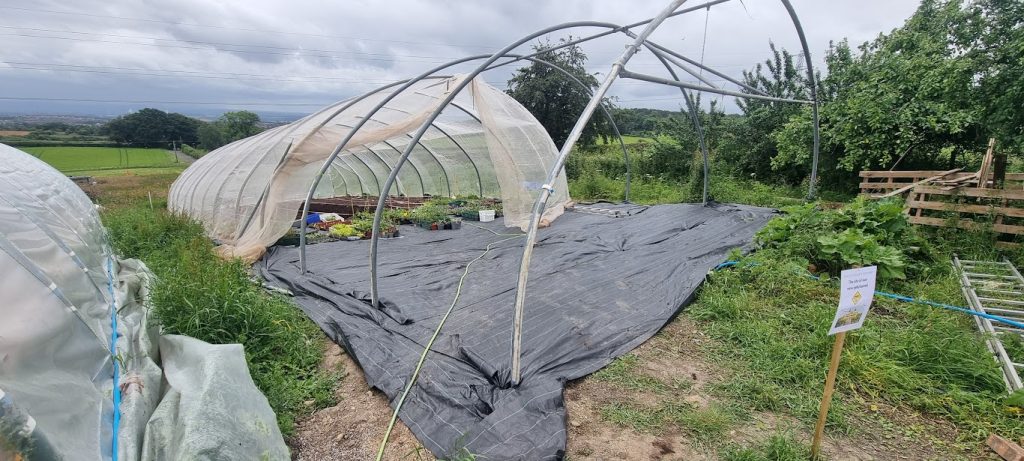
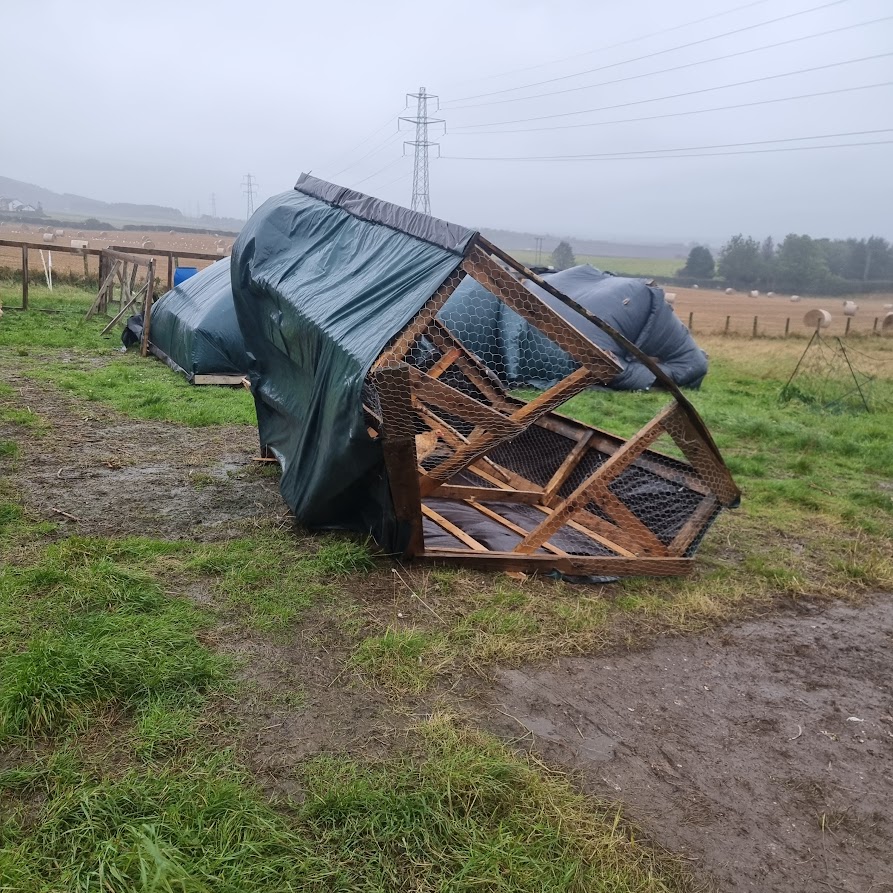
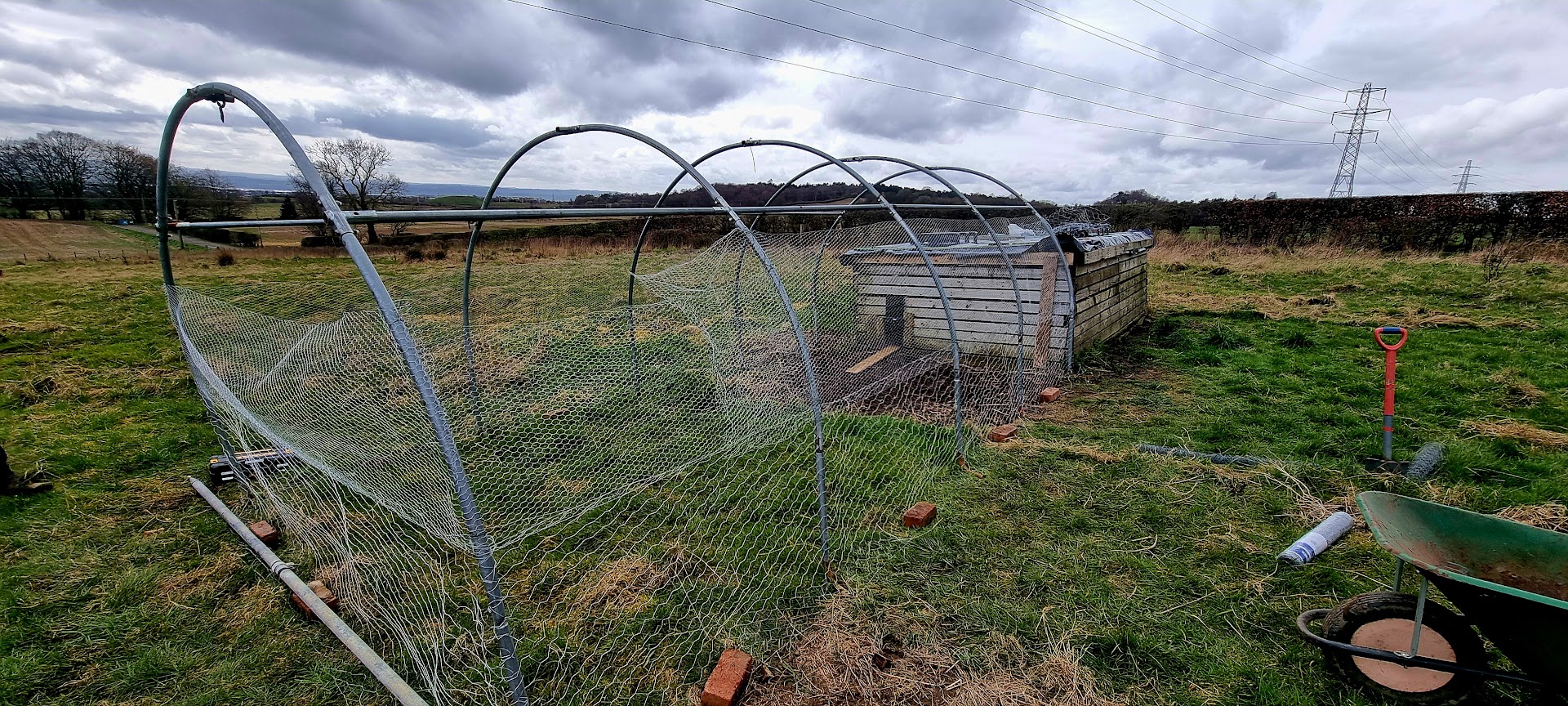
It did not take much for the wind to get the better of our prototype. Fortunately there is no permanent damage. It has helped us with the design, and with lots of shared research we have a final design that takes into account how we’re going to assemble it too.

All the foundations are in, so once we have the parts list we can order the timber, boards and fixings in January. We are appealing for donations to help as this polytunnel is self funded and not reliant on a grant.

We could share this as an open source design just as Real Seeds did for their seed sorter.

The garden is closed until the new year, as it is now very muddy, its dark, cold and pouring with rain.

Hope you have a festive season, and that 2026 is going to be as good for you as it is going to be for us.

The Times They Are a-Changin’

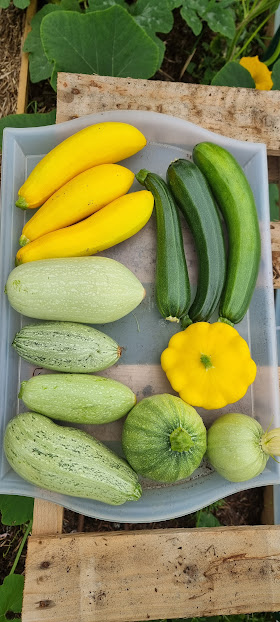
We need funds to buy fixing and timber to finish this project and your donation will have a direct and lasting impact. The expectation is that this polytunnel will produce 500kg of vegetables that include courgettes, chillies, gem squash (all of you Southern Africans know what they are), tomatoes and more tomatoes that will be shared with our community and food charities in the local area.

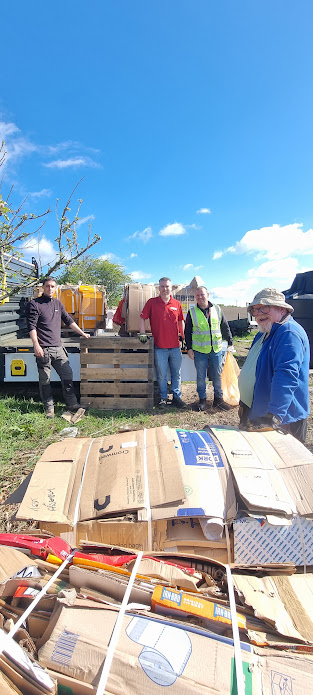
The polytunnel blue pipes, 100m of 63mm mdpe water pipe and the polytunnel cover was donated by my folks, Lindsay and Norma Stewart, and my Dad, despite his age, is genuinely helping the project with ideas and loads of cardboard.

The building ideas for the polytunnel just keep getting better, with trial and error and a lot of hard labour. The improvements from plan A to Plan B are evident. Ideas are not precious, rather shared and changed, making this design process a pleasure for everyone involved. There have only been few times in my long working career where I’ve witnessed this kind of generosity. Thank you to all our volunteers.

“Vision without execution is hallucination.” — Thomas Edison

After a month or so of modifying plans, designs, redesigns and collaboration, a momentous step;
the first polytunnel hoop is up.

The design process has been led by volunteers and improved upon by volunteers and visitors alike. Witnessing and being able to support this process has been a true joy. The improvements to the design since my first solo attempt in 2020 are remarkable, incorporating ideas from caterpillar tunnels, additional bracing for impending storms, and the ability to remove the cover completely if need be.

“Keep it simple stupid” has been applied many times with this polytunnel design, removing unnecessary complications.

In a conversation about plant labeling, a laser cutter that would cut wood into shapes and burn on plant labels was quashed by a simple question, “what about using a china marker?” This is reminiscent of the urban myth “NASA spent millions of dollars developing a space pen while the Soviet Union used pencils.”

The first hoop is up
What a view!.

A market garden visit to Pillars of Hercules

The 2 acres of land at the Sanctuary garden is big enough to be a market garden, with similar to size to the early years of East Neuk Market Garden. After our volunteer visit at the beginning of the month where Tom from East Neuk Market Garden gave us some amazing tips and contacts another was planned.

Eight of our volunteers, if you include Mimi the Greenspaces Coordinator at Eats Rosyth, visited Pillars of Hercules a well established and long running organic market garden, shop and cafe near Falkland. We were shown around by Frank, who fielded our questions with ease. The experience and knowledge he shared so freely was very useful. Thank you.

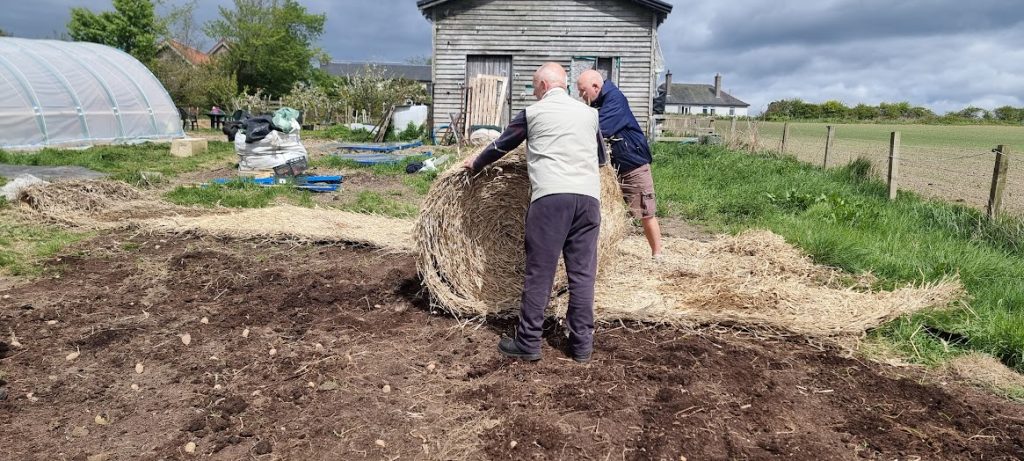
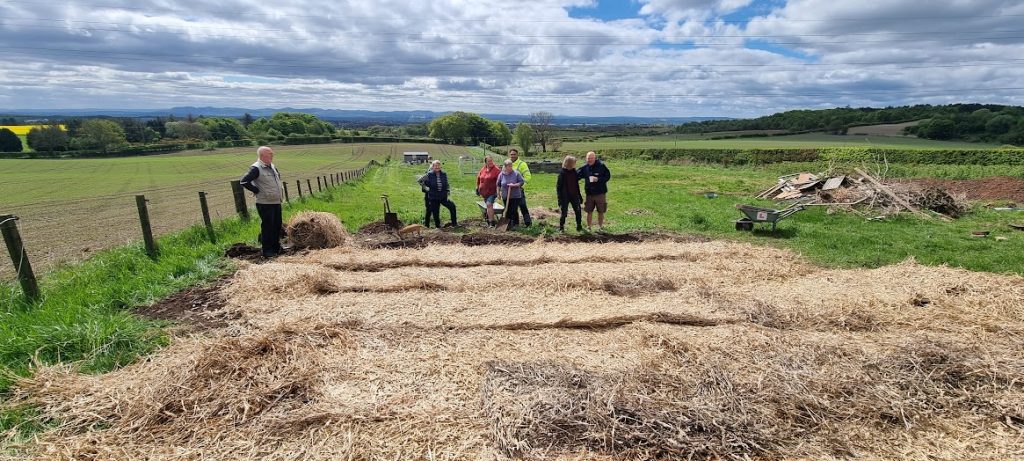
Afterwards, in the Pillar’s cafe over a steaming cup of coffee, we discussed some of the ways Pillars farm could be used in The Sanctuary Garden. Their no-dig beds would make Charles Dowding proud! Jigs to make no dig beds, using straw as a weed mulch, BCS two wheeled tractors, sumi tape for watering, crop rotation, silage tarps, propagation and where to get 20 cubes of organic compost!

The polytunnel design was also discussed and with the collective ideas, the design improved by reducing complexity both with the build and day to day usage. It is a joy to witness the power of working together and allowing an idea to bounce around, evolve and grow into something beautiful. I’m genuinely grateful for the volunteers at The Sanctuary Garden.